The short answer
For an FHA-insured HECM, borrowers are at least 62, the home is their primary residence, they complete HUD-approved counseling, and the lender reviews their ability to pay property taxes, insurance, and upkeep. The home has to be an eligible property type and pass appraisal and title work. Proceeds still depend on the principal limit.
This is the checklist. The reverse mortgage overview stays the short version.
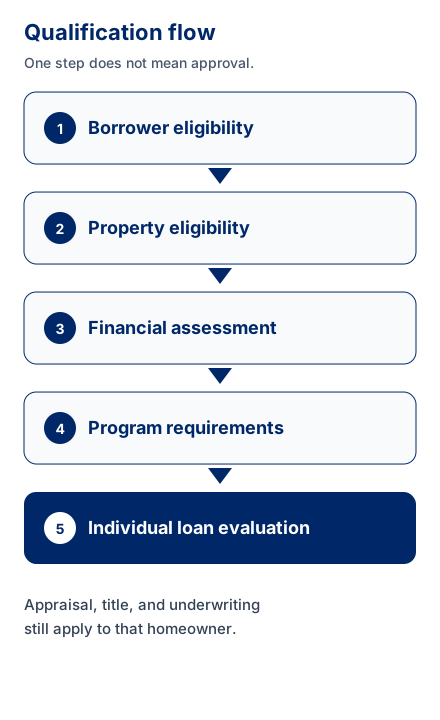
Borrower eligibility
Every borrower must be at least 62. The youngest borrower's age is also the age used to calculate the principal limit. Read the age requirements before you decide who should be on the loan, especially if a spouse is under 62.
Occupancy and title
You occupy the home as your principal residence. You remain the owner. Title has to support the mortgage, which is why liens are paid off or otherwise resolved at closing. A home that is a second home or an investment property is not a HECM primary residence.
Counseling
HUD-approved counseling happens before you close a HECM. The session covers how the loan works, what it costs, and what else you could do with the equity. Bring questions about a younger spouse, property taxes, and what heirs would face. A certificate from counseling is a requirement. It is not a finding that the loan fits you.
Financial assessment
The financial assessment looks at credit history and income and expenses with one practical question: can you keep paying property charges and maintain the home? There is not a single credit-score cutoff published on this site. A clean score does not replace the assessment, and a low score does not automatically end the conversation. If the assessment shows risk, part of the principal limit may be set aside for taxes and insurance.
Credit history is covered here because a separate credit-score page would repeat this section. If that topic needs its own guide later, it should add something this checklist does not.
Property eligibility
HECM property types generally include a one-unit primary residence, a two- to four-unit property if you live in one unit, a HUD-approved condominium, and certain manufactured homes that meet FHA property standards. The specific house still has to pass appraisal, condition, and title requirements. Confirm the current property standards with the counselor and the lender. This page does not list every ineligible feature.
Equity and money, reviewed separately
Eligibility and proceeds are different. You can meet the age and occupancy rules and still have a principal limit that mostly pays off your current mortgage. Use the equity guide, the cost guide, and the calculator for that math.
Obligations after closing
- Live in the home as your primary residence.
- Pay property taxes and homeowners insurance on time.
- Keep the home in reasonable repair.
- The loan is generally repaid when the last borrower sells, moves out, dies, or fails to meet the loan terms.
FHA mortgage insurance changes how a shortfall is handled if the balance later exceeds the home's value. It does not mean the loan can never become due, and it does not remove the tax and insurance obligations.
Last updated 2026-10-01. This content is for education. It is not legal, tax, or financial advice and is not a commitment to lend.