The short answer
Plan on an origination fee, FHA mortgage insurance if the loan is a HECM, third-party closing charges, and interest on the balance. You also keep paying property taxes, homeowners insurance, and upkeep. Those last three are not lender fees, and missing them can put the loan in default.
Initial mortgage insurance
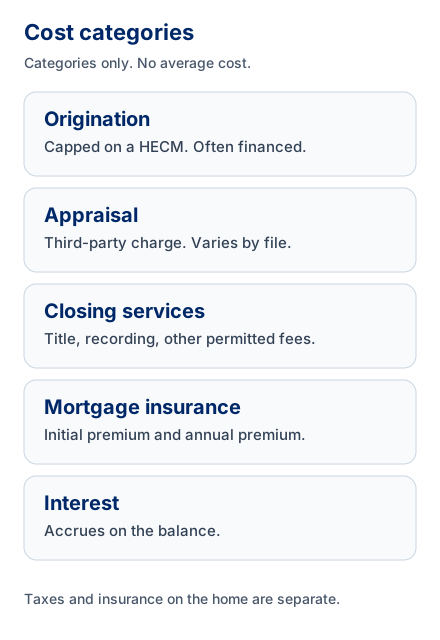
On a HECM, the initial mortgage insurance premium is 2% of the maximum claim amount. The maximum claim amount is the lesser of the home value and the national cap, so the premium is not always 2% of an appraisal that is higher than the cap. This premium is one of the amounts subtracted when the calculator shows net proceeds.
Annual mortgage insurance
HECM annual mortgage insurance is 0.5% of the loan balance. It is added to the rate the balance grows at. It is not a bill you mail in each month while you are meeting the loan terms. The unused line of credit on an adjustable HECM grows at the note rate plus this annual premium. That growth is not interest paid to you.
Origination fee cap
HUD's origination cap is the greater of $2,500, or 2% of the first $200,000 of the maximum claim amount plus 1% of the amount above $200,000, with a hard cap of $6,000. The calculator can illustrate the maximum. The fee on a particular loan can be lower. Proprietary products do not have to follow this cap.
Appraisal and other closing charges
Title, recording, appraisal, and similar third-party charges vary by location and by the file. This page does not publish an average. The calculator has a field for other closing costs so you can test a number you were given. A Loan Estimate is the document that lists actual charges.
Interest
Interest accrues on the amount borrowed and on financed costs. Because you are not making a monthly mortgage payment, the balance grows. That is the central cost of a reverse mortgage, and it is why proceeds today can mean less equity later. How the loan is eventually repaid is covered on the reverse mortgage overview.
What still comes out of your budget
Property taxes, homeowners insurance, association dues, and repairs stay with you. A lender may set aside part of the principal limit when the financial assessment shows a risk that those bills will not be paid. A set-aside reduces the amount you can draw. It is not extra cash.
Costs change how much you can borrow in cash even when the principal limit stays the same. Compare a scenario in the calculator before you treat any online example as your result.
Last updated 2026-10-01. This content is for education. It is not legal, tax, or financial advice and is not a commitment to lend.