The short answer
Equity matters because a reverse mortgage is secured by the home and because existing liens are paid at closing. It does not mean you can withdraw a set share of the house. Lenders look at whether the principal limit covers what must be paid and what you are trying to accomplish.
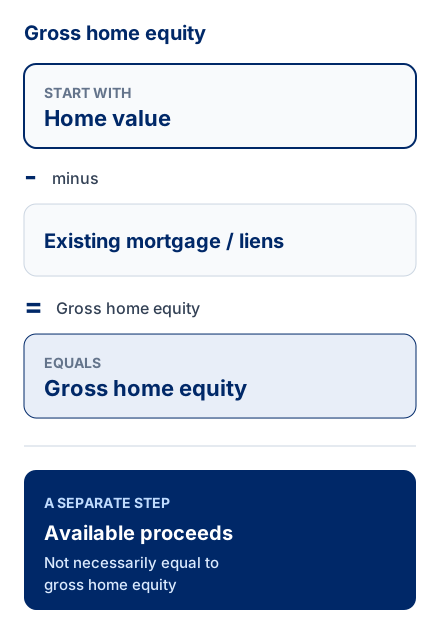
Gross equity is the simple subtraction
Gross home equity is the home's value minus mortgages and other liens. If a home is worth more than the debt against it, there is gross equity. That figure is useful. It is not the check, line of credit, or monthly payment a reverse mortgage would produce.
The borrowing guide explains the next step: how much you may be able to borrow.
Liens are paid before you receive cash
An existing mortgage, a home-equity loan, or another lien that has to be cleared is a mandatory payoff. Upfront mortgage insurance and closing costs are usually financed from the same principal limit. A homeowner can have substantial equity on paper and still have little cash if the payoff and costs consume the limit.
If the required payoffs are larger than the principal limit, the shortfall has to be paid at closing from other funds. Some homeowners in that position do not move forward. That is a math outcome, not a character test.
Why a percentage misleads
Two homes with the same equity percentage can produce different reverse mortgage results. Age changes the principal limit factor. The expected rate changes it again. A HECM also stops counting value above the maximum claim amount. Read how loan-to-value is different on a reverse mortgage before you apply a forward-mortgage LTV habit to this loan.
When equity may not be enough
- The mortgage balance is high relative to the principal limit.
- The youngest borrower is close to the minimum age, which generally lowers the factor.
- The home's value for the loan is limited by the HECM claim cap.
- Repairs or title issues change what can be lent.
None of those points is a denial by itself. They are reasons to run the calculator and then look at the full requirements, including the financial assessment for taxes and insurance.
Hypothetical example
A homeowner who describes the house as "almost paid off" may still be surprised by upfront costs. Another homeowner with a newer mortgage may be surprised that most of the reverse mortgage goes to paying that loan off. Both are illustrations, not typical customer results.
Last updated 2026-10-01. This content is for education. It is not legal, tax, or financial advice and is not a commitment to lend.